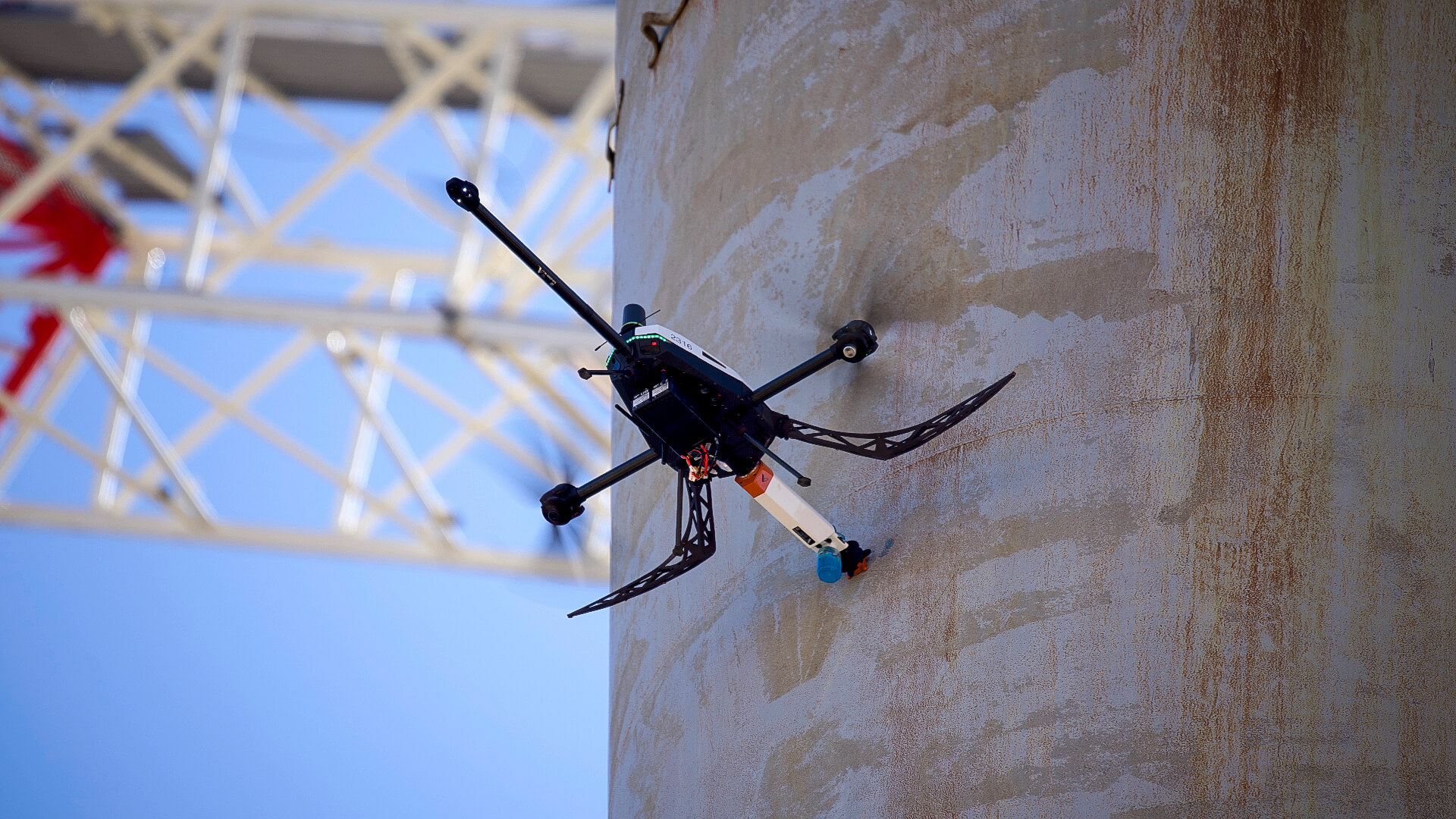
Voliro completed an end-to-end spot repair workflow on a steel silo at a cement plant, executing three corrosion patches with the Voliro T in under one hour with the plant operating throughout.
Conventionally, the same three patches at height would require scaffolding and two to four days of site activity, or a rope access team with weeks of lead time; costs that in practice mean small patches get deferred, grow, and become larger problems. The Voliro T executed all three from the ground in under an hour, changing the economics of early intervention fundamentally.
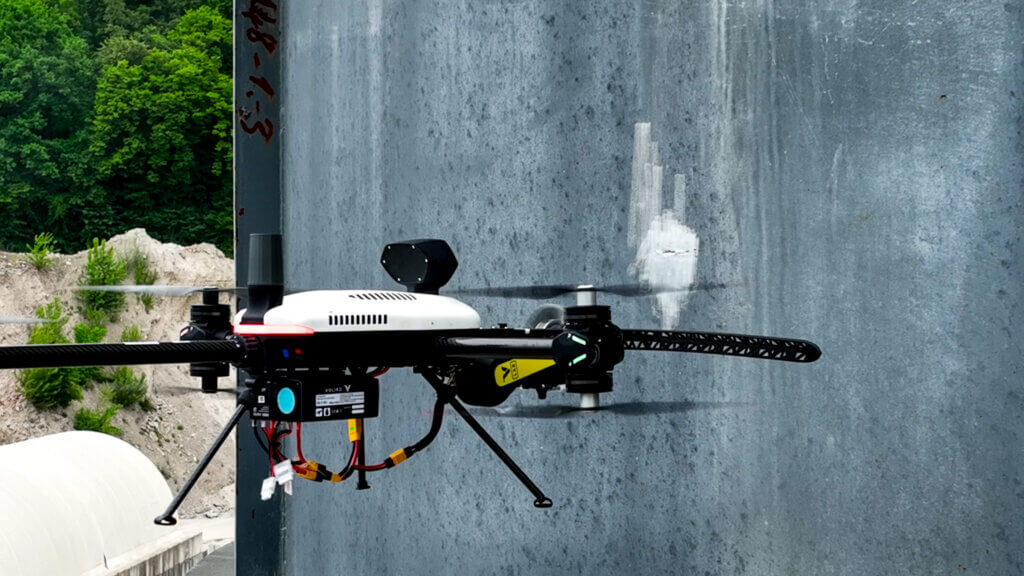
If you have a steel asset with active corrosion and want to run a Spot Repair demo or proof of concept on-site, please get in touch.
| Asset | Cylindrical steel silo, cement plant |
| Patches completed | 3 × approx. 30 × 30 cm |
| Total duration | Under 1 hour |
| Production downtime | Zero |
| Surface prep standard | SSPC-SP 11 (≥ 25 µm profile) |
| Coating applied | PPG Protective & Marine |
| Operator | Dennis den Elzen, Voliro Product Manager |
The host site was a cement plant with a large cylindrical steel silo showing active surface corrosion on its outer wall – the kind of early-to-mid stage rust that is visible, unambiguous, and exactly what spot repair is designed to address before it becomes a structural concern.
The corrosion patches were distributed across the silo wall at height, in an environment representative of the access challenges that make conventional spot repair so logistically demanding. There was no controlled setup, no pre-prepared test surface. The Voliro T met the asset as it was.
Dennis den Elzen, Product Manager at Voliro, executed the complete aerial spot repair workflow on three patches, each approximately 30 × 30 cm, demonstrating that the technology works on the kind of industrial steel asset it is designed for.
Surface preparation is the step that determines whether a coating lasts. Without the right surface profile, even a correctly specified product will delaminate. This is why the Aeroblaster payload is central to what makes drone-based spot repair credible.
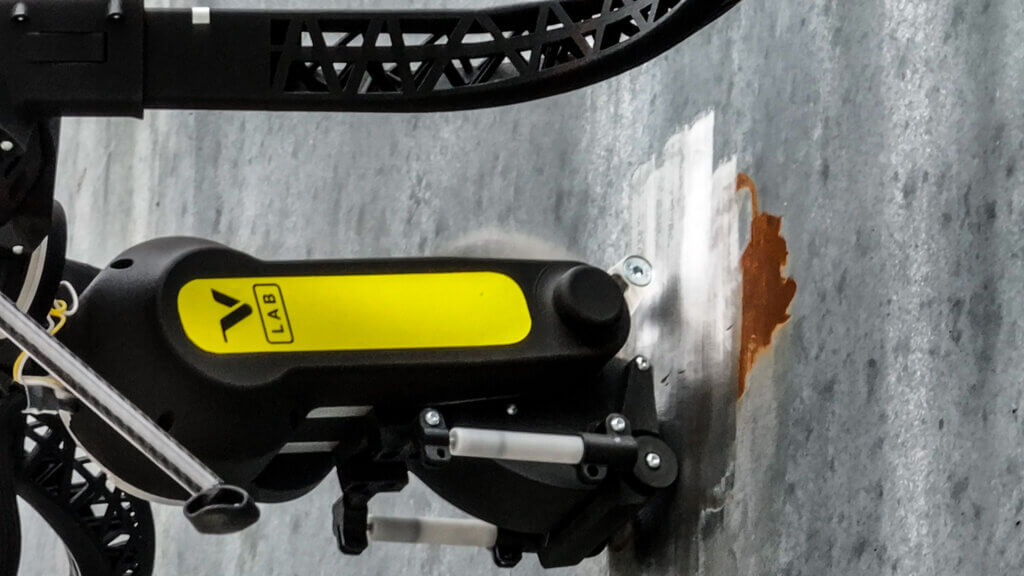
The Aeroblaster was co-developed with MontiPower — a global leader in mechanical surface preparation. MontiPower’s Bristle Blaster® and MBX® technologies are globally recognised for producing high-quality surface profiles on steel substrates. Voliro has integrated these proven, field-validated tools directly into an aerial payload compatible with the Voliro T platform.
The Aeroblaster has been externally validated to consistently achieve the SSPC-SP 11 minimum profile of ≥ 25 µm, confirmed by an independent testing laboratory and reviewed by SGK (Swiss Society for Corrosion Protection) — a neutral technical authority with over 100 years of expertise in corrosion technology. On this deployment, it delivered that profile on genuine corroded steel — not a sample panel, not a test piece.
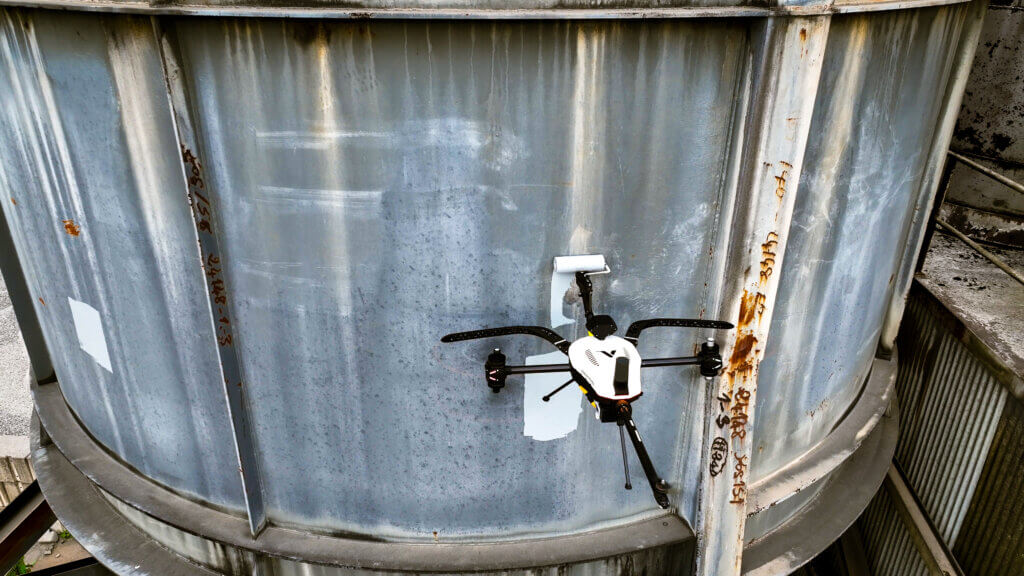
With each patch prepared, the Voliro T applied PPG Sigmashield 880 using the precision roller applicator payload. The product is an industry-standard 2K protective coating already in use by asset integrity teams for manual spot repair programmes.
Every patch was documented with images and video captured during the operation and stored in the Voliro Cloud — a timestamped, traceable record of what was repaired, where, and how.
The Voliro T is a modular, open platform. The same aircraft that carried the Aeroblaster for surface preparation and the roller for coating application is the same aircraft used for NDT inspection with payloads for Ultrasonic Testing, Pulsed Eddy Current, Dry Film Thickness measurement, and more. Inspection and repair become a single integrated workflow, delivered by the same crew on the same visit.
For drone service providers and inspection companies already operating the Voliro T, spot repair is a natural expansion of scope. For asset owners, it means the gap between identifying corrosion and acting on it can collapse to near zero.
For asset owners and integrity teams managing corrosion on storage tanks, silos, stacks, pipe bridges, or any elevated steelwork, the alternative to waiting for a scaffolding mobilisation now exists. The Voliro T executes the complete spot repair workflow aerially: corrosion removal, surface profiling, coating application, and traceable reporting from the ground, on the asset, while operations continue.
If your facility has steel assets with active corrosion at height, contact us to discuss a demo or proof of concept on-site.