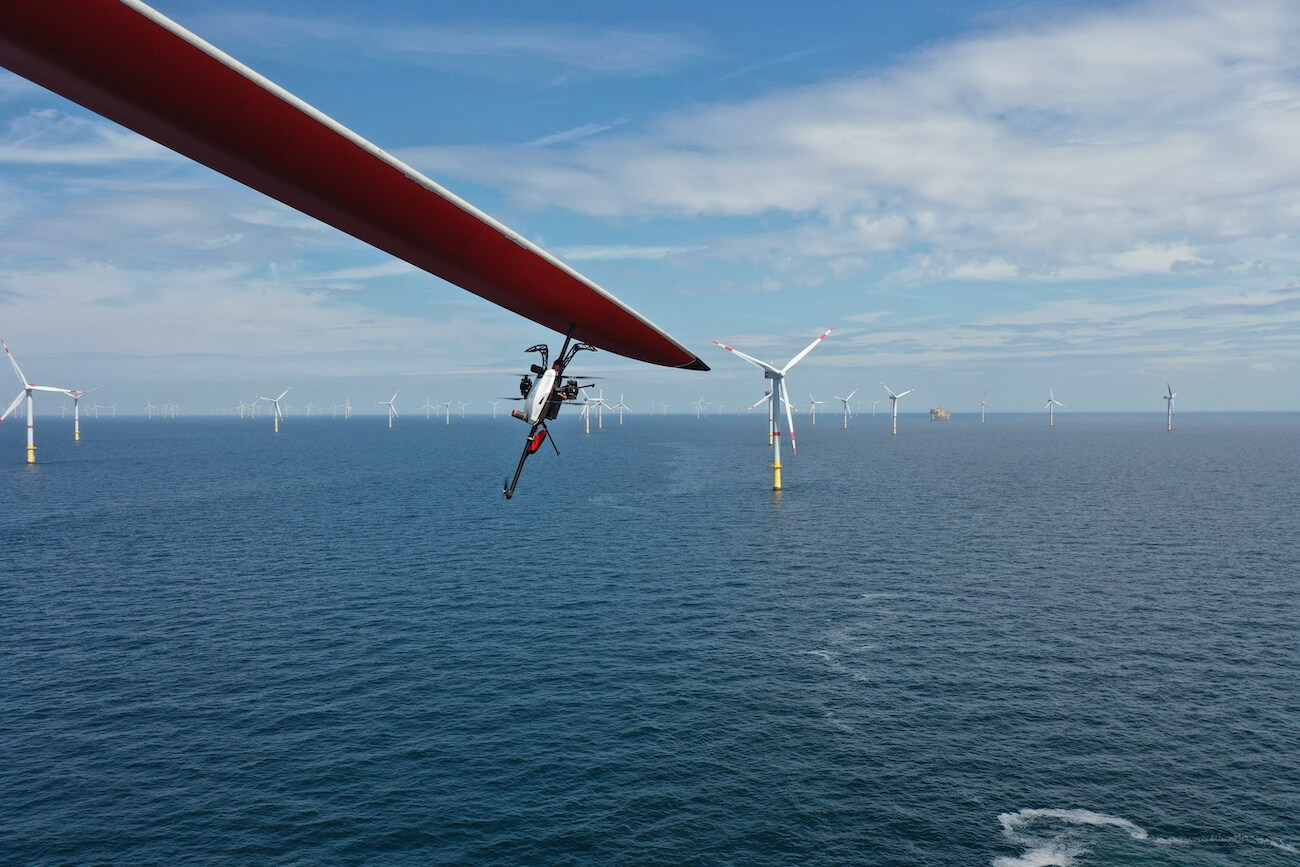
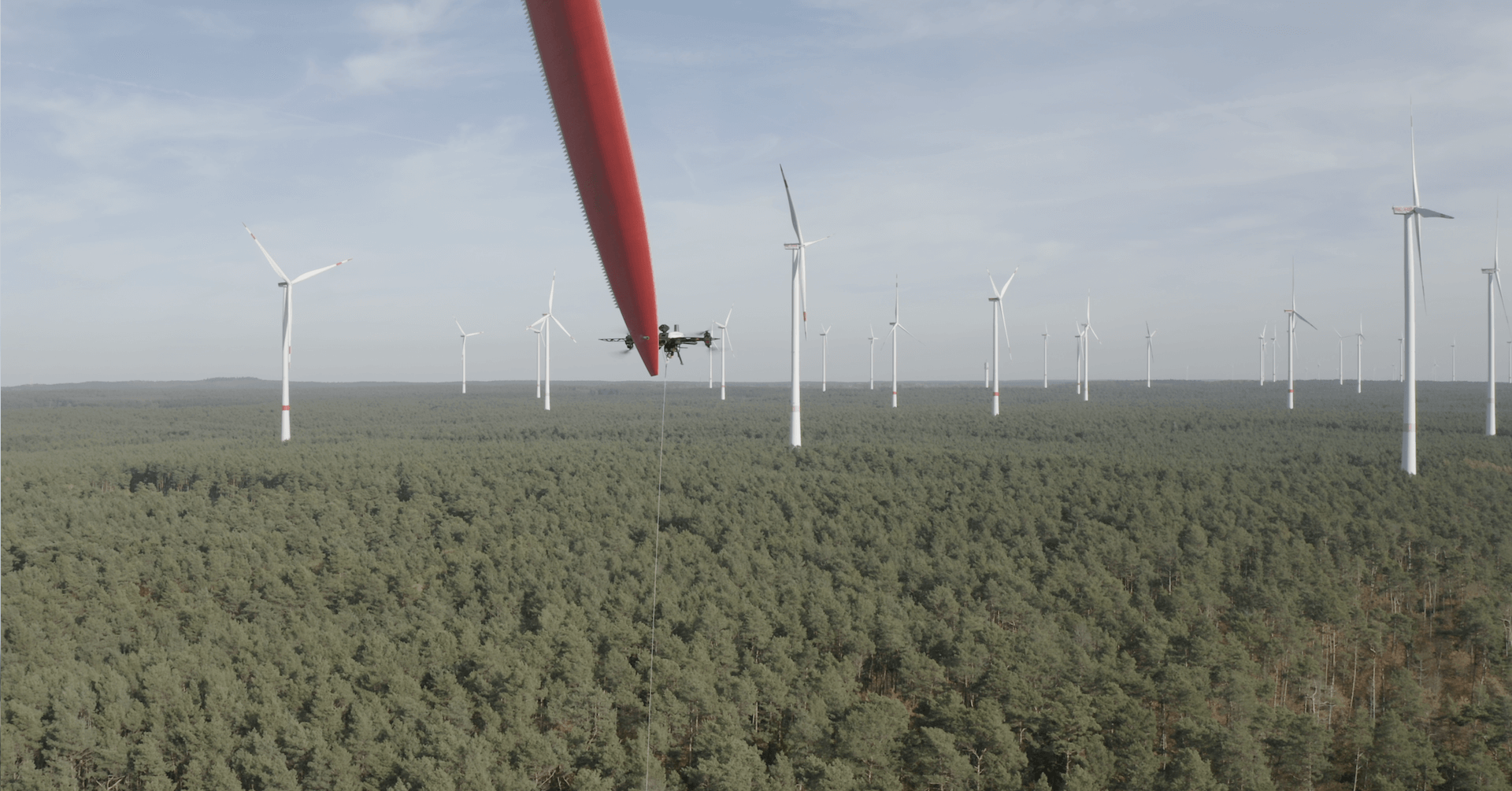
Ensuring that an asset’s wall thickness remains within safe limits is essential for detecting corrosion and preventing costly failures. Standards like API 653 and ASME B31.3 require consistent thickness measurements across tanks, piping, and other critical infrastructure.
But traditional methods like rope access and scaffolding are slow, risky, and often require surface preparation or asset shutdowns. Even advanced solutions like crawlers and spot sensors have limitations in coverage and flexibility. Now, there’s a smarter, non-contact option built for speed, safety, and scalability: Voliro T.
No surface prep required: No need to remove paint or coatings—just fly and inspect.
Small crew: Two-person operation replaces large rope access or scaffolding teams.
Faster inspections: Up to 200 measurements per hour with no scaffolding or downtime.
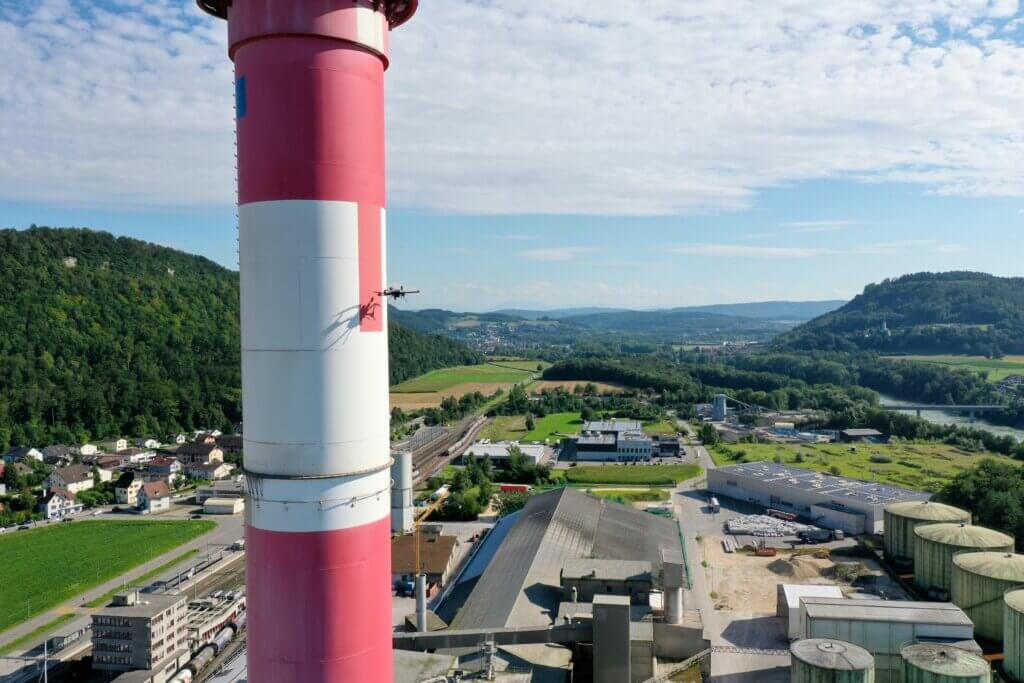
Here’s a detailed comparison of the inspection tools used in both approaches:
| Component | Traditional Rope/Scaffold Method | Voliro T Drone-Based Inspection |
| Measurement Device | Handheld EMAT probe connected to flaw detector | EMAT sensor integrated with Voliro T and connected to onboard signal processor |
| Coupling | Dry coupling, but manual probe pressure must be applied and maintained | No couplant required; drone maintains consistent contact using onboard stabilization |
Surface Preparation | May require localized cleaning to ensure probe contact | No surface preparation required — painted, coated, and rough surfaces are inspectable as-is |
Data Visualization | Readout on handheld flaw detector or laptop | Live data visualized on Voliro App at ground station |
| Data Logging | Manual screenshots, notes, or internal memory (asset correlation may require post-processing) | Digital data logged onboard with measurement metadata and exportable in CSV or JSON |
| Accessibility | Requires scaffold or rope access to reach surfaces | Drone can access vertical, curved, or hard-to-reach surfaces at up to 250 m in height |
Crew Size | Typically 3–5 personnel for safe rope access or scaffold setup | 2-person team: pilot and EMAT operator |
| Environmental Readiness | Sensitive to human error, fatigue, and access risks | Designed for outdoor use; stable contact in wind up to 8 m/s, 12 m/s in free flight |
Electromagnetic Acoustic Transducer (EMAT) inspection measures wall thickness without requiring contact or couplant. It uses electromagnetic pulses to generate ultrasonic waves directly within the material, making it ideal for painted, coated, or rough surfaces where traditional UT may struggle.
The Voliro T system enables this with:
In most cases, inspections are completed in under an hour per asset, with no surface preparation, no shutdown, and no scaffolding.
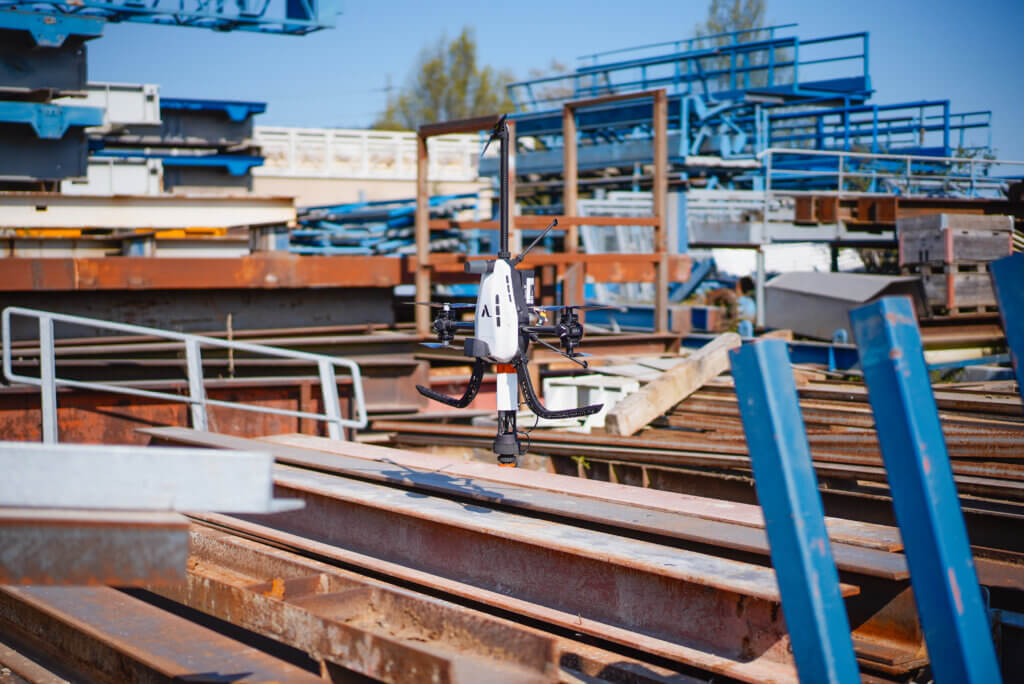
Other EMAT inspection options — including handheld probes, magnetic crawlers, and fixed sensor arrays — offer limited reach and flexibility:
By eliminating surface prep and enabling contactless inspections on hard-to-reach assets, Voliro T’s drone-based EMAT solution offers a smarter, faster, and safer alternative to conventional thickness measurement methods.
With Voliro T, you can: