The story of how Grupo DR1 became the first company to bring robotic NDT to Brazil and beyond, using the Voliro T to inspect live chimneys, tanks and wind turbines with no shutdown, less risk and up to 10× the daily output.
Grupo DR1’s team was midway through a presentation, walking a client through the Voliro T and how they planned to use it for a live chimney inspection, when the client cut in: “Inspecting it live? That can’t be possible yet.”
The chimney ran around the clock. The plant shut down just once a year, for its annual audit, and until now that window had been the only way to investigate a suspect structure: send a human inspector up to the area and have them take the readings by hand.
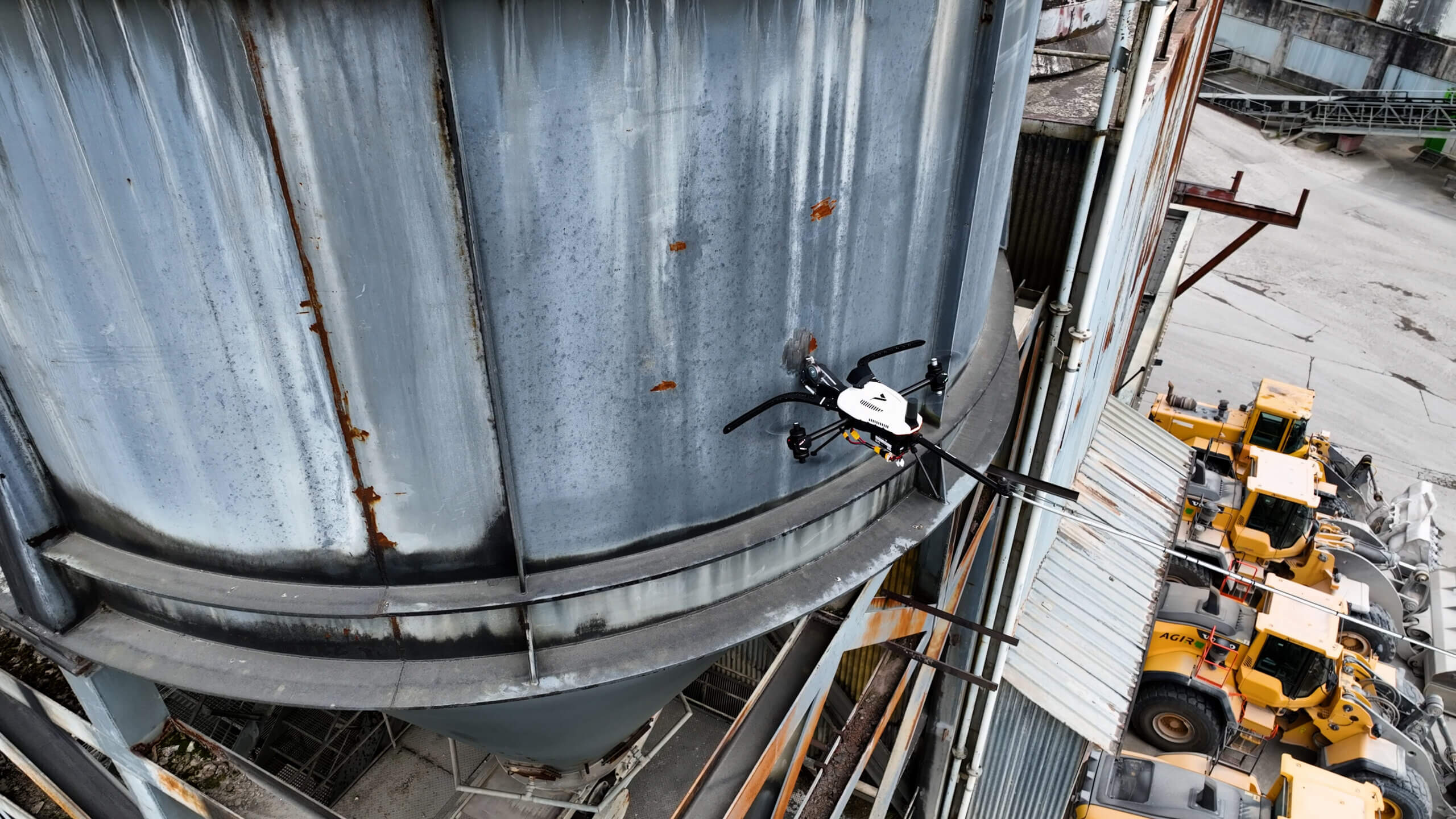
By offering an alternative approach, Grupo DR1 eliminated the need for an operational shutdown. Even with the chimney operating at extreme temperatures of 100 to 120 °C, the inspection team deployed the Voliro T platform.
Outfitted with a specialized high-temperature ultrasonic payload capable of measuring surfaces reaching up to 260 °C, they completed the structural evaluation while the plant maintained continuous, uninterrupted production.

They started with a thermographic scan and immediately spotted a temperature anomaly. Ultrasonic thickness measurement then pinpointed the exact problem: real material loss, concentrated in a single quadrant near the top of the chimney.
By the time the annual shutdown arrived, the client already knew precisely where to repair, had the replacement materials staged, and could build scaffolding only where it was needed and not across the entire structure.
Precise data, less downtime, more cost savings eliminating scaffolding and fewer people at height is the promise Grupo DR1 has spent a decade turning into routine.
Grupo DR1 started in 2015 in Rio de Janeiro, at the height of a local construction boom, and at a moment when almost no one in Brazil was using drones commercially. That novelty was the company’s opening. After landing a first construction job, it expanded fast: within a year, Grupo DR1 was working with nine of the largest construction firms in Rio.
The team then looked abroad, studying the North Sea inspection market and began recruiting people out of the oil & gas industry to push the technology further. Between 2017 and 2018 that led to an offshore drone development project with Petrobras, focused squarely on reducing risk and cost in inspection operations.
From there, momentum built: the first offshore trial, work with operators including SBM, Modec and Equinor, and by 2020 a major contract serving Petrobras. As the company grew, it deliberately layered in expertise, bringing in NDT inspection specialists and rope-access professionals to deepen its operational know-how.
By 2023, Grupo DR1 recognised that oil & gas, while high-potential, is a limited market. So it diversified into wind and renewables, pulp & paper, steel, and sugar & ethanol without ever leaving its core mission.
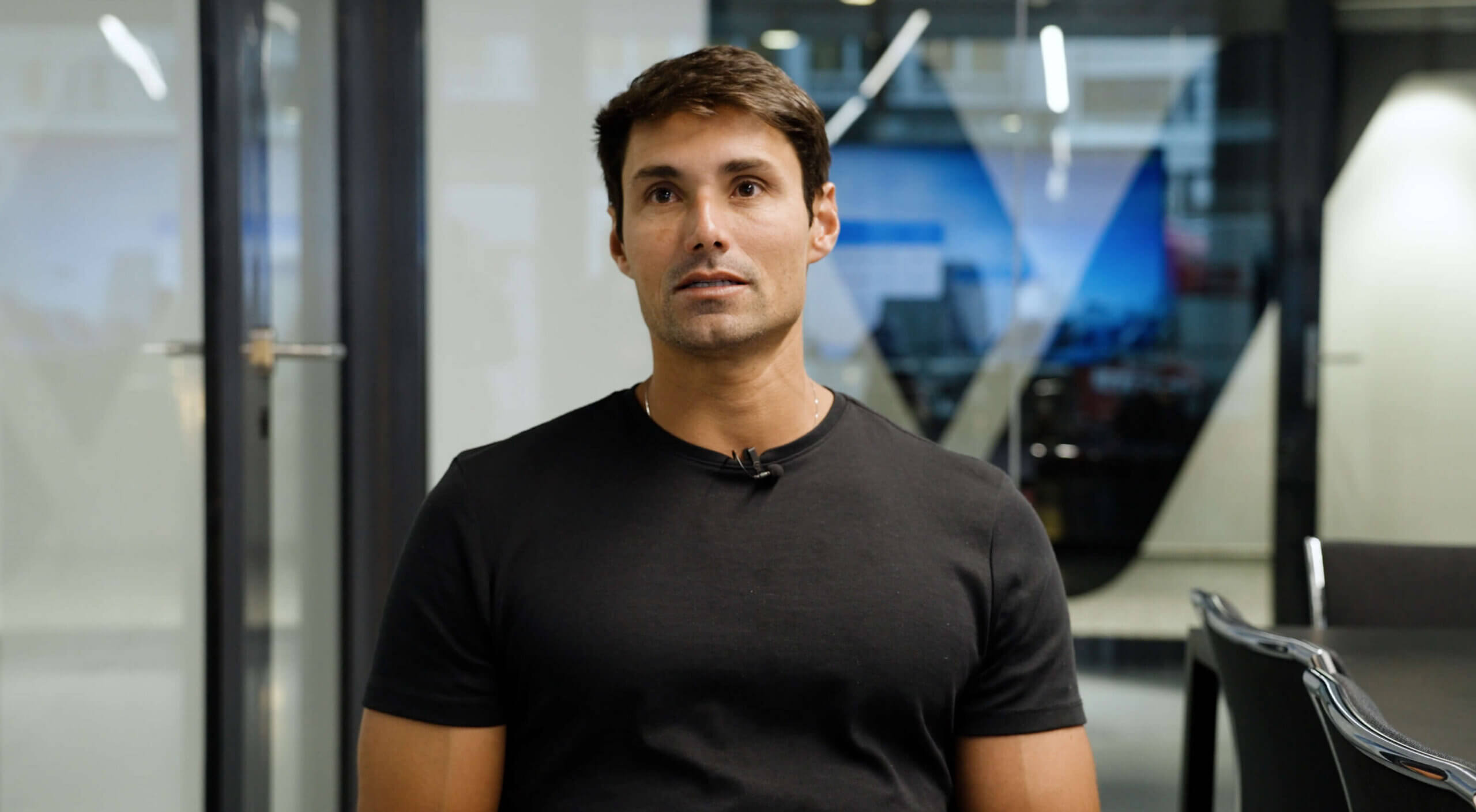
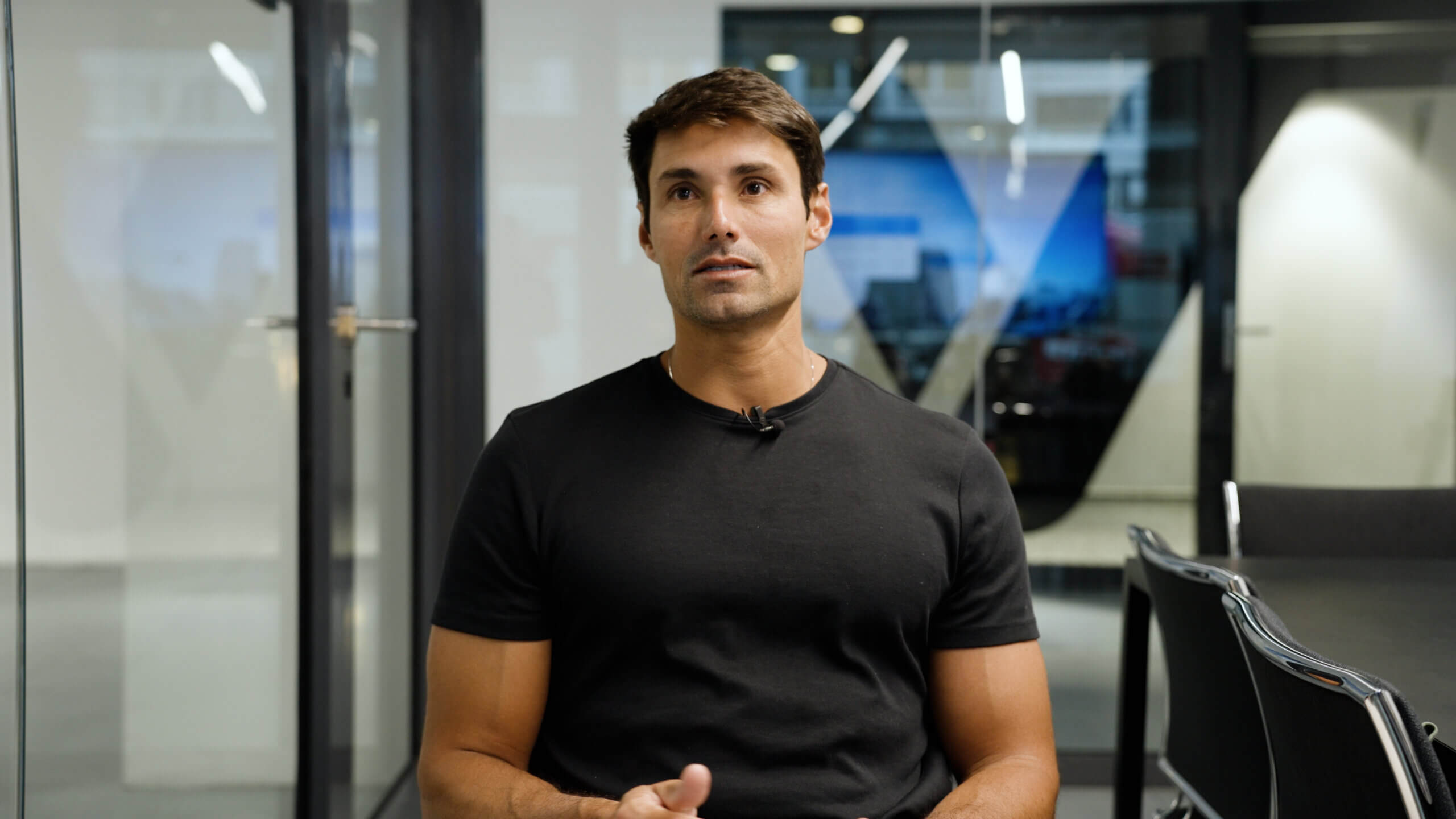
Our core business is inspection: removing people from hazardous areas, reducing operational costs, and increasing the productivity of our clients’ operations.”
Ricardo Santos, Operations Director at Grupo DR1.
Grupo DR1 discovered Voliro in 2023, after studying contact inspection technology for some time and hearing the same request from clients again and again. At the end of that year, the company brought the Voliro T to Brazil for a development project with Petrobras.
Then came the proof. Across 2024, Grupo DR1 put the technology through a rigorous validation: first in a controlled experimental phase at Petrobras’s research facility, then in the field across four onshore refineries, testing on stacks, fixed-roof tanks, pipelines and other equipment in a wide range of real-world situations. At every step, results were compared directly against conventional methods, with Petrobras technicians checking the numbers.
The verdict: the equipment was validated 100%. With that, Grupo DR1 became the first company to bring this contact inspection technology to Brazil, and continued commercial services in 2025.
The value case is straightforward: Grupo DR1 runs the same, globally approved thickness-measurement sensors used in conventional NDT, but replaces the climber or the scaffolding crew with an aerial robot. The result is the same trusted data, without the human risk.
Where the difference shows up most clearly:
Ricardo is candid about the limits, too, and that honesty is part of the pitch. Wind speed above roughly 16–17 km/h can stop an inspection, and some locations remain too tight for the equipment, so conventional methods still have their place. “You can already do it in most places,” he says and where you can, the advantage is decisive.
For years, the hardest part wasn’t technology, it was belief. Many clients simply didn’t know robotic contact inspection existed.
A lot of people say seeing is believing. Until you actually see these aerial robotic platforms doing the work, many people are skeptical.” Ricardo Santos, Operations Director at Grupo DR1.
That skepticism is now fading fast. After a wave of proofs-of-concept and paid services through 2024 and 2025, Grupo DR1 reports strong demand heading into 2026, with new clients actively requesting operations. Today the company counts roughly 60 active clients running operations across its portfolio.
Delivery stays lean: a typical job needs just a pilot and an inspector, with portable equipment that travels by plane batteries included, in carry-on luggage, so Grupo DR1 can serve clients anywhere in Brazil and across Latin America.
Grupo DR1’s catalogue now spans external contact-based NDT drone inspections, aerial photogrammetry and LiDAR surveying, confined-space inspection with both cabled and battery-powered robots, and underwater ROV inspection below the waterline. Next on the roadmap: drone-based cargo transport.
On the partnership with Voliro, Ricardo is direct, the operational cost of the technology is real, so it makes the most sense for operators with genuine inspection volume. But the relationship, he says, delivers: a proactive commercial team, responsive support, and a subscription model that has expanded to fit more kinds of operators.

The fit is very positive. The Voliro team is always proactive, bringing options so you can keep moving forward.” Ricardo Santos, Operations Director at Grupo DR1.
A decade after betting on drones during a construction boom, Grupo DR1 is doing what once sounded impossible,
Who is Grupo DR1? Grupo DR1 is a Brazilian robotic and drone-based industrial inspection company, founded in 2015 and headquartered in Rio de Janeiro. It provides visual, thermographic and ultrasonic thickness-measurement inspection across oil & gas, wind and renewables, pulp & paper, steel, sugar & ethanol, and mining.
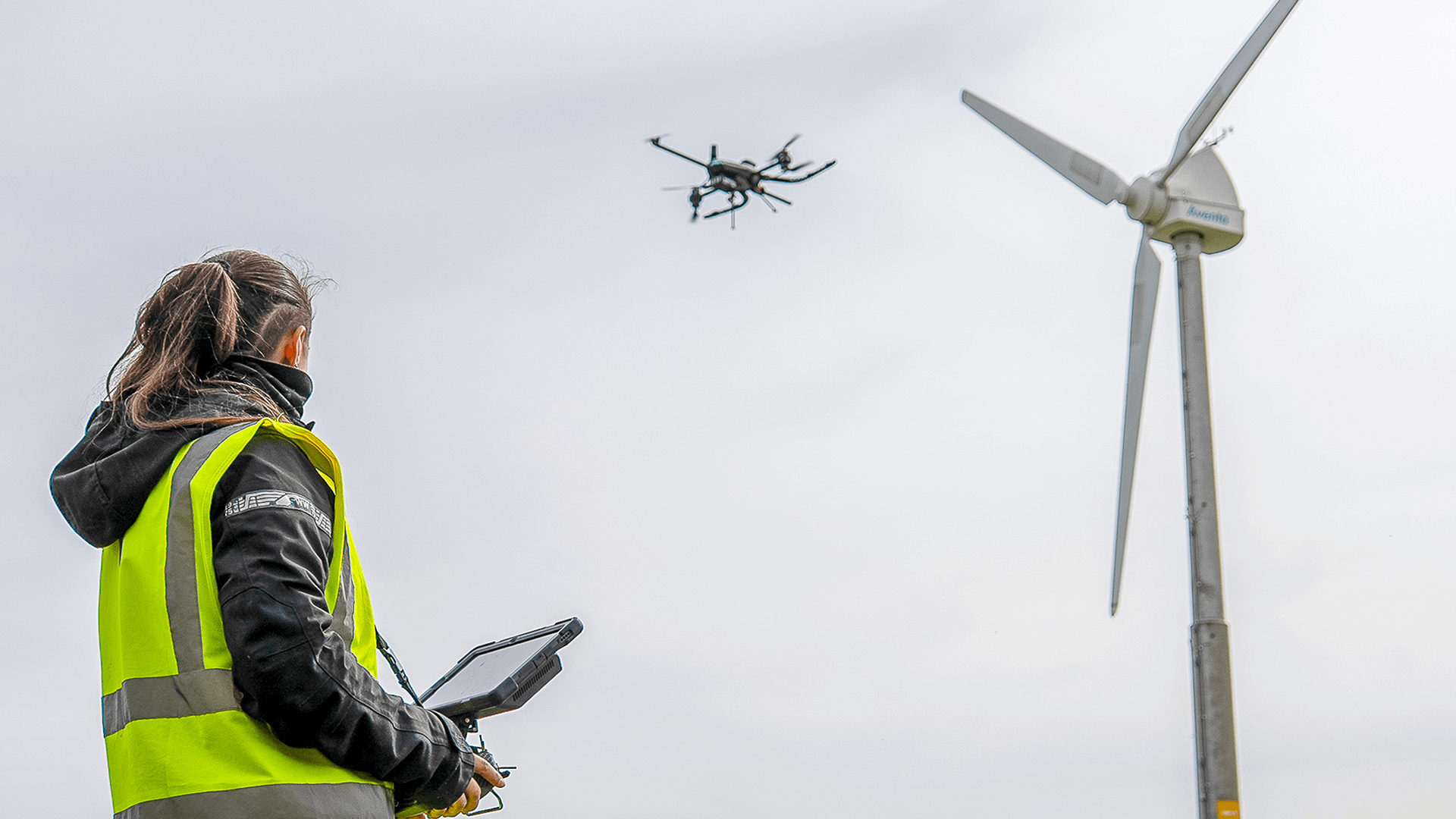
What is the Voliro T used for at Grupo DR1? Grupo DR1 uses the Voliro T for contact inspection, primarily contact-based NDT thickness measurement of assets such as chimneys, tanks, piping, furnaces and LPS inspections for wind turbines, replacing climbers and scaffolding while using the same globally approved sensors.
What results has Grupo DR1 achieved with robotic inspection? Highlights include inspecting a live chimney at 100–120 °C with no shutdown, averaging four wind turbines per day (up to ten) versus one conventionally, and a 100% validation of the technology across four onshore refineries with Petrobras technicians verifying results against conventional methods.
Where does Grupo DR1 operate? Across all of Brazil from its Rio de Janeiro base, and internationally in Latin America, including Argentina, Chile and Mexico.
How can operators work with Grupo DR1? Through the Grupo DR1 website and LinkedIn page, and via its dedicated commercial team, which handles inquiries and arranges demonstrations and validations.
A Voliro customer success story in conversation with Ricardo Santos, Operations Director of Grupo DR1, the first company to bring and deliver contact robotic inspection in Brazil and beyond.