Robotic and drone-based inspections have fundamentally improved how industrial assets are inspected. By reducing the need for manual access, they have delivered major gains in safety, productivity, and data collection across sectors such as oil and gas, power, wind, chemicals, and mining. They show what an asset looked like at a moment in time but not how a specific location is changing over time. And for asset integrity programs, that difference matters.
Snapshots are useful. They help identify defects, document conditions, and reduce risk during inspections. But when inspections are repeated, even small variations in where measurements are taken can make results difficult to compare.
This creates several challenges:
Asset integrity programs depend on comparable measurements. This is why Condition Monitoring Locations (CMLs) are widely used across industries: by revisiting the same physical location over time, teams can distinguish real change from noise.
The challenge has been practical execution—especially at height or in hard-to-access locations. Traditional markings, drawings, or photos help, but they rarely guarantee true point-level repeatability in the field. Without repeatability, teams are often left comparing different locations and trying to infer trends.
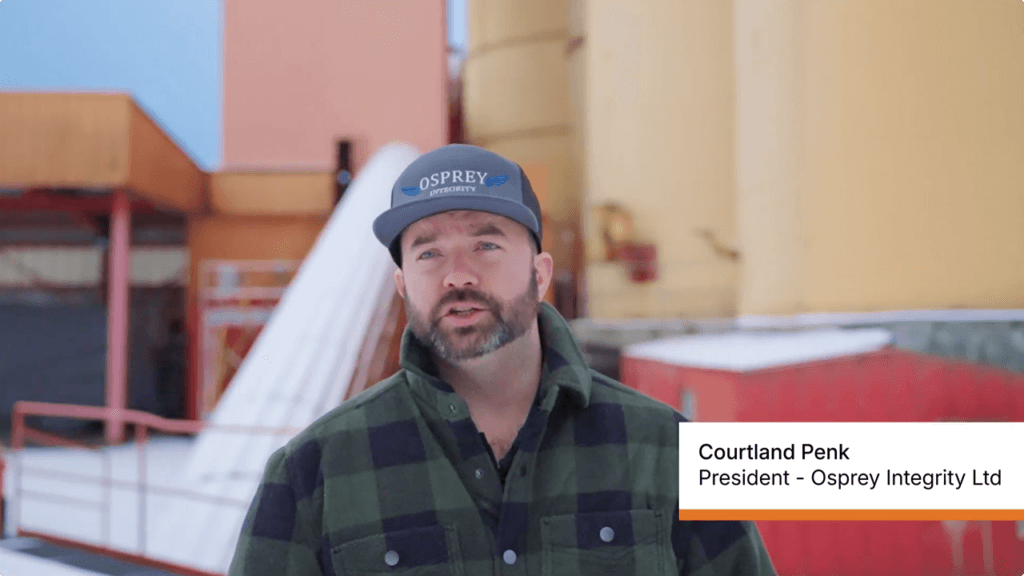
One of the biggest challenges in remotely operated robotic inspections has been returning to the same locations. Voliro makes this possible, enabling repeatable inspections and consistent data that give a clearer understanding of asset integrity over time.” Courtland Penk, President of Osprey Integrity
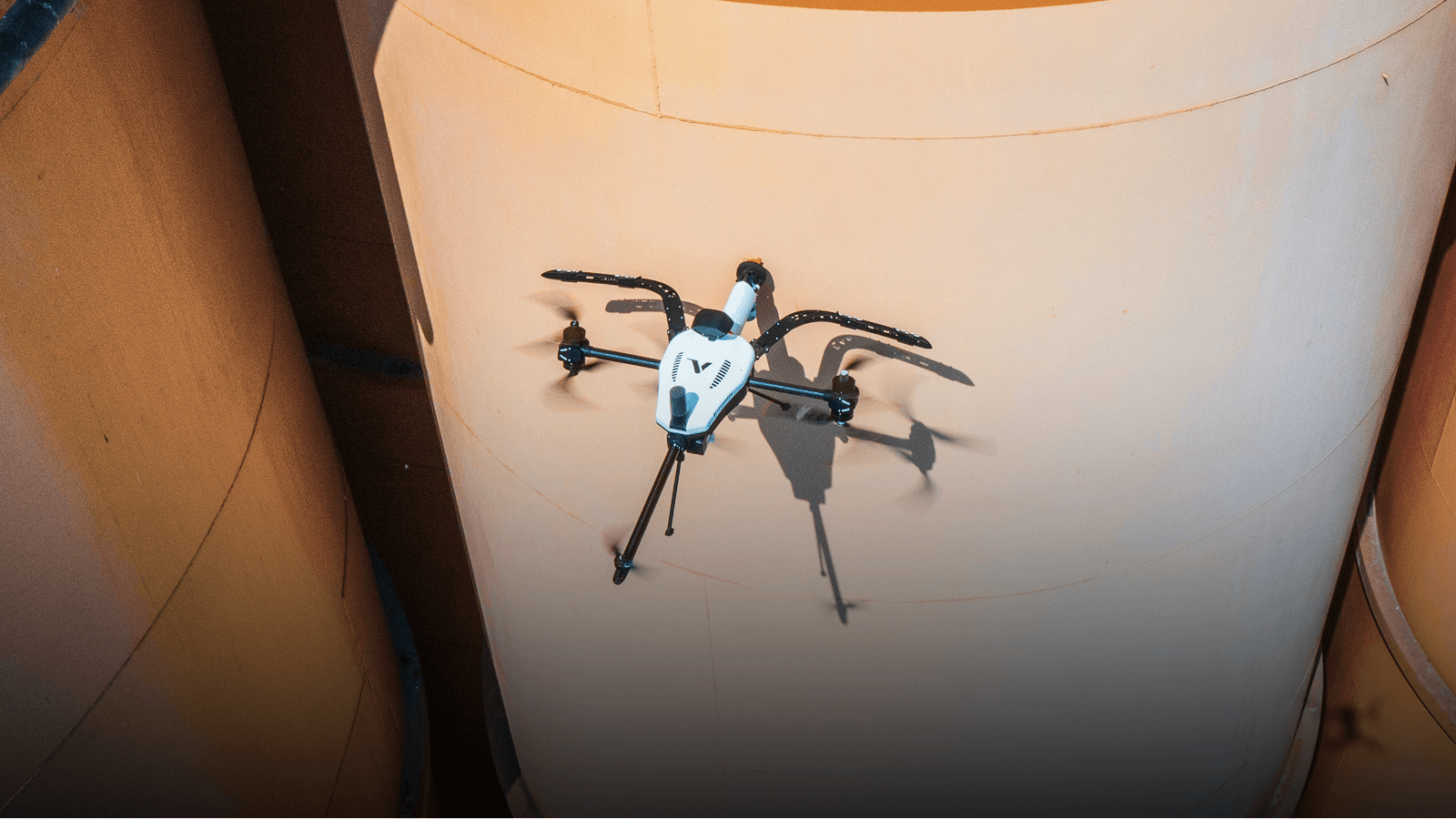
Voliro’s Repeatability feature enables pilots to return to the same physical inspection points across missions by combining anchoring, RTK-based positioning, and AR-guided navigation.
During the initial inspection, the pilot anchors a measurement point directly on the asset. This anchor creates a precise spatial reference tied to the physical structure. On future missions, the pilot selects this previously measured point and re-anchors on it, allowing the system to guide them back to all associated inspection locations using an augmented reality overlay.
Each new measurement is automatically associated with its original location, ensuring spatial consistency across missions. This enables reliable trending, accurate corrosion rate calculations, and higher-confidence asset integrity decisions, transforming robotic inspections from isolated snapshots into consistent, time-series data.
Importantly, Repeatability is not an add-on or standalone module. It is delivered as part of the Voliro T subscription, reinforcing Voliro’s approach of continuously expanding the value customers receive over time.
As inspection programs evolve, asset owners and service providers gain access to new capabilities—such as Repeatability—without changing hardware or rethinking their commercial model. This ensures that improvements in inspection quality, data defensibility, and workflow alignment are delivered consistently across the installed base.
By including Repeatability within the subscription, Voliro enables customers to move from snapshot-based inspections toward long-term, repeatable asset integrity workflows as part of a single, unified platform.
Repeatability unlocks several important shifts in how robotic inspections are applied:
Repeatability aligns closely with how asset integrity programs already work. By enabling drone-based Condition Monitoring Locations (CMLs), robotic inspections can integrate more naturally into existing inspection and maintenance strategies.
This is especially valuable for:
In these contexts, repeatability is not just a technical improvement—it is an operational one
Repeatability is more than a new feature. It represents a shift in what robotic inspections are expected to deliver: not just access and visuals, but confidence over time.
By enabling inspections to return to the same point, again and again, Repeatability helps teams move from reacting to findings toward predictable, data-driven asset integrity.
Robotic inspections have already changed how assets are accessed and inspected. Repeatability changes what those inspections can be used for. By stopping the comparison of different locations and enabling true apples-to-apples measurements, Repeatability turns robotic inspections into a foundation for long-term insight, confidence, and better decisions.